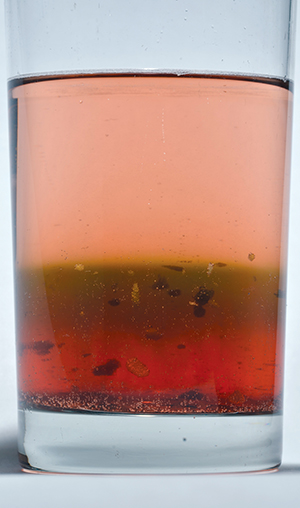
Do you need a fun way for kids to celebrate Halloween and learn science? If so, try some of these candy science experiments to get your candy bubbling, spouting, sparking, sinking, and separating!
Here’s a list of eleven favorite candy experiments from all over the internet.
1. Sour Candy Bubble Test
Sour candy contains acid, which causes the sour taste. With the
Acid Test candy experiment,
You can test for the acid by dissolving the candy and adding baking soda to make a bubbling reaction.
You can do this with any type of candy, but it’s especially fun with Pixy Stix and Warheads!
2. Floating M&Ms
Need a Halloween magic trick?
Drop some M&M’s
in a glass of water and watch the letters. In a few minutes, the M’s will start floating!
3. Marshmallow Sink
Can you sink a marshmallow? Take the
Marshmallow Challenge
to find out!
A marshmallow contains tiny air bubbles, which puff it out to make it less dense than water. To make it sink, you must make the marshmallow denser than water by making it smaller. Smash the marshmallow to break the air bubbles, then roll it into a ball. If you make it small enough, it will sink.
4. Life Saver Lights
For this experiment, which the Exploratorium calls
“Lighting In Your Mouth,”
you need a dark room, a mirror, and a pack of wintergreen LifeSavers. Stand in front of the mirror and start chewing the LifeSavers. You will see sparks of light as the energy from the chewing motion rips electrons off of the sugar molecules, then recombines them to release flashes of light.
This also works with other wintergreen sugar candies, such as Altoids.
5. Candy Color Separation
Chromatography
lets you separate candy colors so you can see what dyes have been mixed together.
To do chromatography, cut a strip of paper from a coffee filter. Wet a colored candy, such as a brown M&M, and dab a spot of color near the bottom of the paper. Stand up the paper up in glass with a half-inch of water, and watch as the colors rise up the paper.
6. Chocolate Bloom
When
chocolate blooms,
the cocoa butter begins to separate from the cocoa solids. Eventually the cocoa butter can form complex patterns of white crystals.
7. Dancing Gummy Frankenworms
For the
Dancing Gummy Frankenworms experiment, you can make gummy worms dance by slicing them into strips, soaking them in baking soda water, then dropping them in vinegar. The bubbles will hold the pieces up so they dance!
8. Giant Gummies
Make your gummy worms grow to double their length with the
Giant Gummies experiment.
Just put them in water and wait for two days to see how big they get.
9. Bubbling Pop Rocks
To find the secret ingredient in
Pop Rocks,
put them in water and watch what happens. As the candy dissolves, it releases tiny trapped air bubbles that float to the surface.
10. Melting Races
If you really want to see what your candy is made of, cover a cookie sheet with aluminum foil, line up different types of candy, and heat in the oven at 300 degrees to
see what happens.
For instance, you’ll see oil spots form on Starbursts, candy bars melt away from their fillings, and
taffy turn translucent
as the air bubbles contained inside rise to the surface and disappear.
11. Mentos Coke Geyser
One of the internet’s favorite candy experiments, the
Mentos Coke geyser lets you send coke spouting into the air.
Try it with Diet Coke, and wear clothes that can get wet!
For more fun ideas on how to experiment with candy, check out the candyexperiments.com
experiments page!